

Kontrola zubního mostu
Zkontrolujte svůj zubní most
Vyberte příznaky, které jste zaznamenali po instalaci zubního mostu. Nástroj vám poradí, zda je potřeba navštívit zubního lékaře pro úpravu.
When a dental bridge is placed, it’s not just about replacing a missing tooth-it’s about restoring function, comfort, and long-term oral health. But many people don’t realize that the success of a dental bridge often depends on something simple yet critical: broušení zubů. This isn’t about polishing for aesthetics. It’s about precision fitting, bite balance, and preventing future damage to your natural teeth and the bridge itself.
Proč je broušení zubů důležité po instalaci zubního mostu?
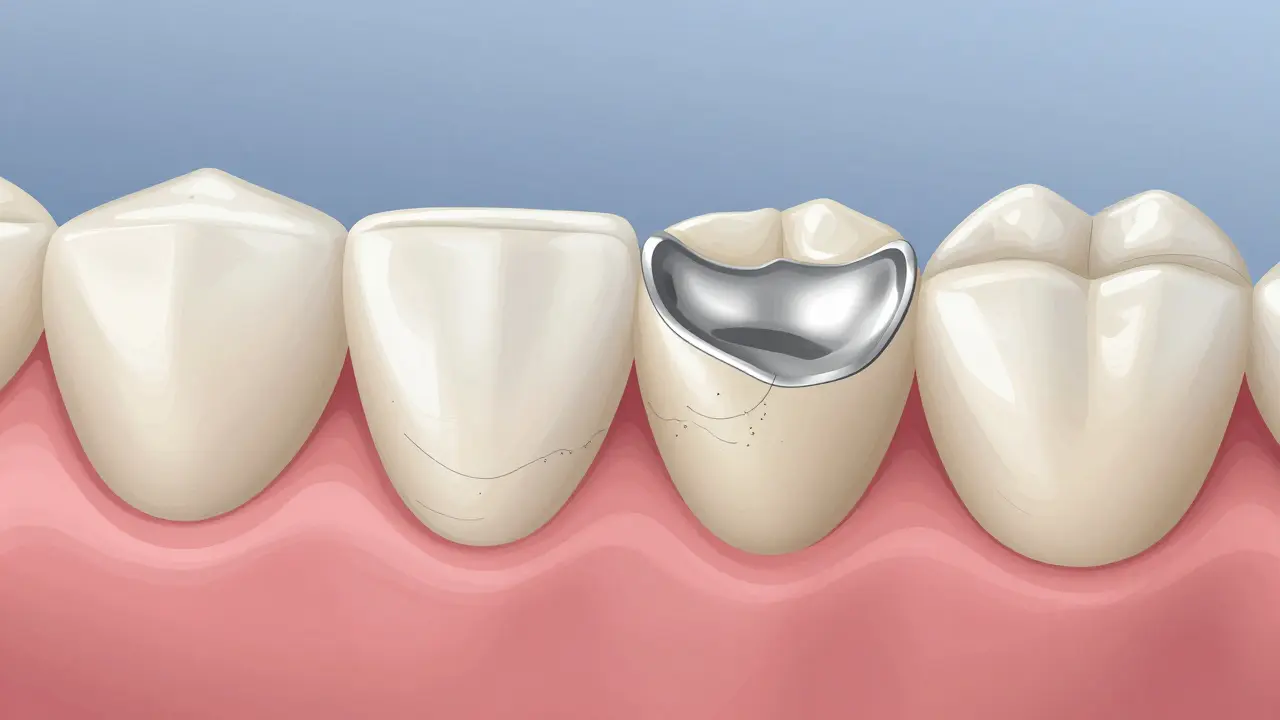
After a dental bridge is cemented in place, it’s common for the occlusion-the way your upper and lower teeth meet-to be slightly off. Even a tiny misalignment of 0.1 mm can cause problems over time. You might not feel it right away, but constant pressure on one side of the bridge can lead to microfractures in the porcelain, loosening of the cement, or even damage to the supporting teeth.
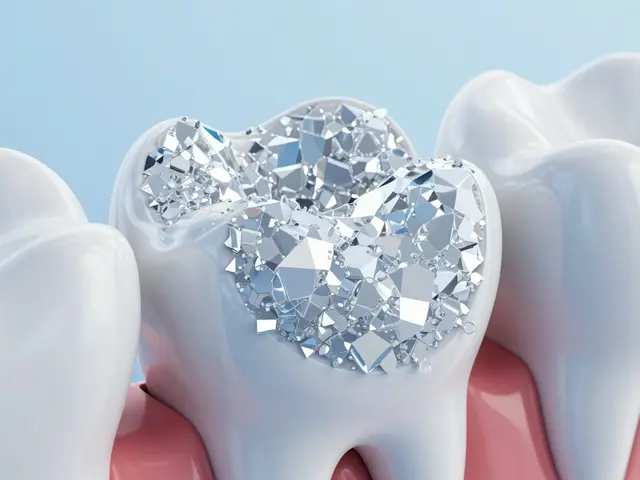
Broušení zubů after bridge placement isn’t optional. It’s a standard step in professional dental work. The dentist uses fine diamond burs or abrasive strips to gently remove tiny amounts of enamel from the bridge or adjacent natural teeth. This ensures the bite feels natural and distributes chewing forces evenly across all teeth involved.
Without this step, patients often report discomfort when biting into an apple, pain in the jaw after meals, or even headaches from clenching. These aren’t normal side effects-they’re warning signs the bridge wasn’t properly adjusted.
Jak probíhá proces broušení zubů?
The process is quick, painless, and usually done right after the bridge is cemented-or during a follow-up visit if the patient returns with complaints.
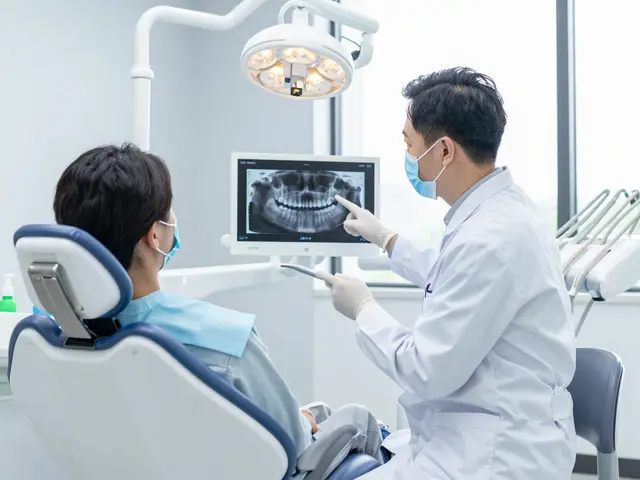
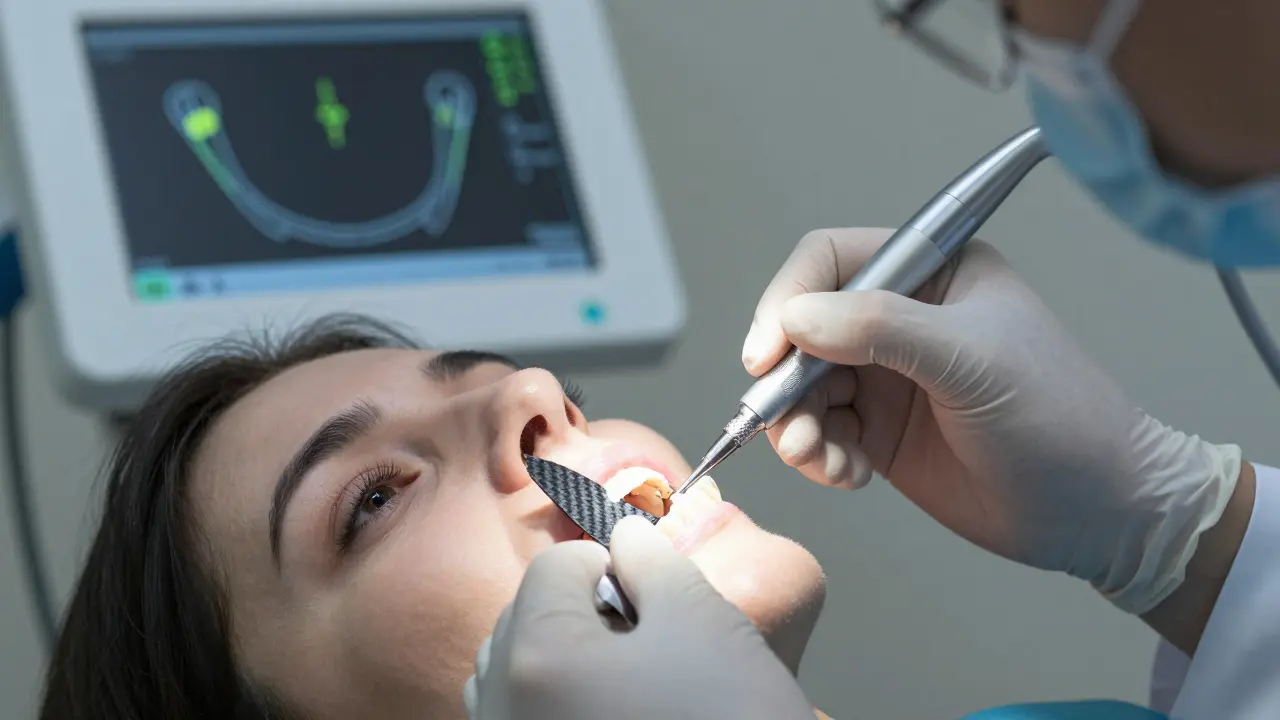
- Testování bite: The dentist places thin carbon paper between your upper and lower teeth. When you bite down, the paper leaves colored marks showing exactly where contact occurs.
- Identifikace vysokých bodů: These marks reveal spots where the bridge is hitting too hard. Common problem areas include the cusps of molars or the edges of front teeth.
- Jemné broušení: Using a small dental handpiece with a fine-grit diamond bur, the dentist removes only the necessary amount of material. No drilling into the tooth structure-just the bridge surface or the opposing tooth.
- Opakování testu: The carbon paper test is repeated until the bite feels even and smooth across all teeth.
This isn’t a one-size-fits-all procedure. A bridge replacing a single molar needs different adjustments than one replacing three front teeth. The material matters too-porcelain bridges require more careful handling than metal or zirconia ones.
Co se stane, když broušení neuděláte?
Skipping this step might seem harmless, but the consequences add up over time:
- Trhání cementu: Uneven pressure causes the adhesive holding the bridge to break down faster. Studies show improperly adjusted bridges are 3.5 times more likely to debond within five years.
- Poškození oporových zubů: If the bridge puts too much stress on the anchor teeth, they can crack, develop cavities under the crown, or even require root canals.
- Bolavá čelist a temporomandibulární poruchy: Chronic uneven biting triggers muscle tension, leading to jaw pain, clicking, or locking of the joint.
- Praskání keramiky: Porcelain is strong-but not indestructible. Repeated micro-impacts from a high spot can cause invisible cracks that eventually become visible chips.
One patient I treated came in with a bridge that had been in place for two years. She had constant pain on the left side and thought it was a cavity. Turns out, one point of contact on the bridge was pressing directly into the enamel of her natural molar. After a 10-minute adjustment, her pain vanished. No fillings, no root canal-just precise broušení zubů.
Kdy je broušení zubů nejúčinnější?
Timing matters. The ideal window is within 48 hours after the bridge is cemented. At that point, the cement is still curing, and minor adjustments won’t compromise the bond. If you wait too long, the cement hardens fully, and even small changes become harder to make without risking the integrity of the entire restoration.
That’s why most dentists schedule a follow-up visit 1-2 weeks after placement-not just to check for decay or gum irritation, but specifically to fine-tune the bite. Don’t wait until you feel pain. If your bridge feels “off” when you bite, even slightly, schedule that adjustment.
Je broušení zubů stejné jako broušení zubů při výrobě korunek?
Yes and no. The technique is similar, but the goals differ slightly. With crowns, you’re adjusting one tooth to fit the opposing arch. With bridges, you’re balancing multiple teeth as a single unit. That means the dentist must consider how the entire structure interacts with the opposing teeth-not just one point of contact.
Also, bridges often involve more complex shapes. A three-unit bridge has two abutment teeth and one pontic (fake tooth) in the middle. Each part can contact the lower teeth differently. A single high spot on the pontic can throw off your entire chewing pattern.
This is why experienced dentists use digital occlusal analysis tools like T-Scan systems. These devices measure bite force in real time and show exactly where pressure is concentrated. While not every clinic has them, they’re becoming standard in practices that specialize in restorative dentistry.
Co můžete dělat doma, aby se broušení zubů potřebovalo méně?
While professional adjustment is essential, your habits can reduce the need for repeated corrections:
- Nepřekousávejte tvrdé potraviny: Nuts, ice, hard candy-these put extra stress on bridges. Use your back teeth for chewing, not your front ones.
- Nezatížte most: If you’re missing a molar and have a bridge, avoid chewing on that side until the adjustment is complete.
- Používejte noční ochrannou destičku: If you grind your teeth at night, a nightguard protects both your natural teeth and the bridge from excessive wear.
- Pravidelná kontrola: Come in every six months. Your dentist can spot early signs of wear or misalignment before they become problems.
Je broušení zubů bezpečné pro zubní most?
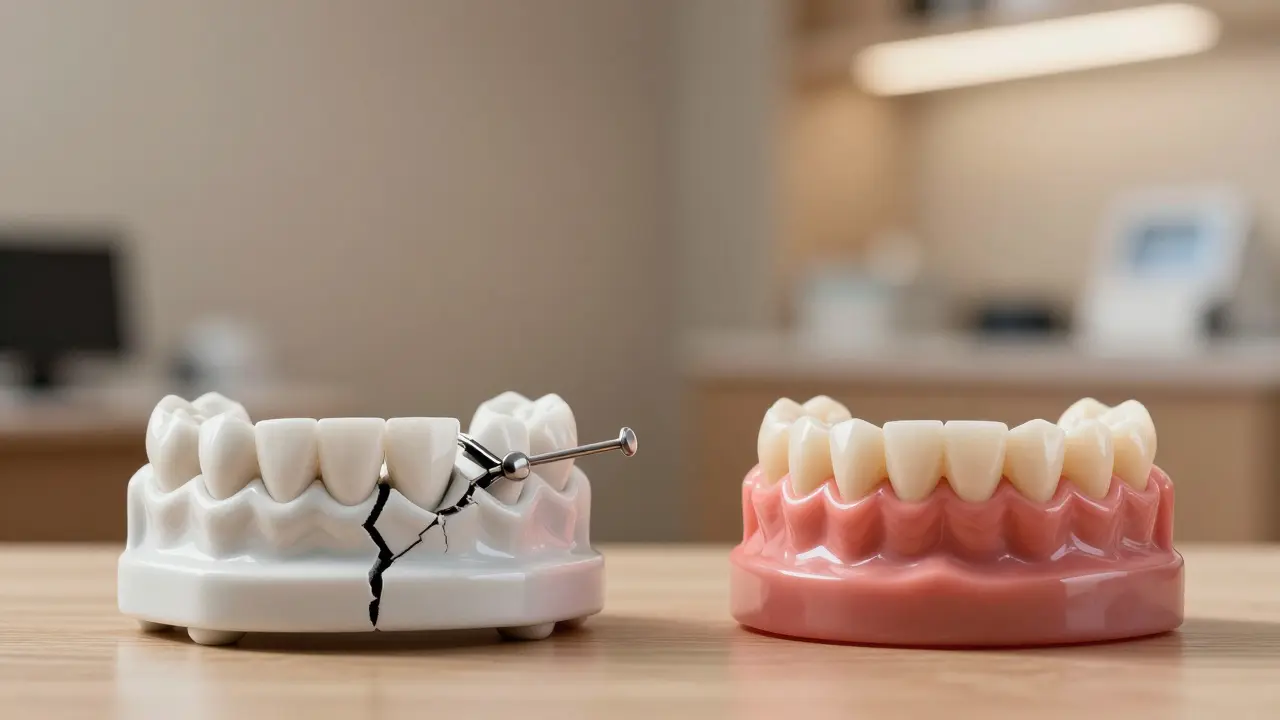
Absolutně. Moderní materiály jako zirkonie nebo slitiny kovů jsou designed to withstand minimal adjustments. Dentists use tools calibrated to remove only micrometers of material-far less than the thickness of a human hair. There’s no risk of weakening the bridge if done correctly.
What’s risky is NOT doing it. A bridge that doesn’t fit right is more likely to fail, and replacing it is expensive. A simple 15-minute adjustment costs a fraction of a new bridge.
Co když po broušení stále cítíte nepohodlí?
If discomfort continues after adjustment, there might be another issue:
- Nezdravé dásně: Inflammation under the bridge can mimic bite problems. A deep cleaning might be needed.
- Chybný návrh mostu: If the bridge was designed too long or too high, it may need to be remade.
- Zubní brnění: Night grinding can undo even perfect adjustments. A nightguard is often the real solution.
Don’t ignore persistent pain. Go back to your dentist. Ask them to recheck the occlusion with carbon paper-or better yet, request a digital bite scan. You deserve a bridge that feels natural and lasts decades.
Závěr: Broušení zubů není doplněk-je to součást léčby
A dental bridge isn’t just a prosthetic. It’s a long-term investment in your oral health. And like any investment, it needs proper care. Broušení zubů isn’t a luxury or an extra step-it’s the final, essential piece that turns a good restoration into a great one.
Don’t settle for a bridge that feels “almost right.” If it doesn’t feel perfectly natural when you bite down, speak up. Demand an adjustment. Your teeth, your jaw, and your wallet will thank you years from now.
Je broušení zubů bolestivé?
Ne, broušení zubů není bolestivé. Procedura se provádí na povrchu zubního mostu nebo oporových zubů a neovlivňuje zubní nerv. Používají se jemné nástroje, které odstraňují jen minimální množství materiálu. Většina pacientů necítí nic nebo jen lehký tlak.
Kolik stojí broušení zubů po instalaci mostu?
Většina zubních klinik zahrnuje broušení do ceny samotného zubního mostu. Pokud je potřeba dodatečné broušení během následné návštěvy, často se neúčtuje zvlášť. Pokud vás však někdo za to účtuje, zeptejte se, zda se jedná o standardní postup-mělo by být součástí záručního servisu.
Může broušení zubů poškodit zubní most?
Pokud je provedeno kvalifikovaným zubním lékařem, broušení nezničí most. Moderní materiály jako zirkonie nebo slitiny kovů jsou navrženy tak, aby snášely malé úpravy. Riziko vzniku poškození je prakticky nulové, pokud se používají správné nástroje a techniky.
Je nutné broušení zubů i u mostů z plastu?
Ano. I když plastové mosty jsou méně trvanlivé, stále potřebují přesnou úpravu bite. Nevhodné broušení může způsobit rychlejší opotřebení nebo zlomení. Přestože plast je měkčí než keramika, jeho tvar musí být přesně vyvážený, aby se nezatěžovaly okolní zuby.
Jak často se musí broušení zubů opakovat?
Ideálně jen jednou-hned po instalaci. Pokud se však v průběhu let změní vaše zuby (např. kvůli opotřebení, ztrátě zubu nebo zubnímu brnění), může být nutná další úprava. Pravidelné kontroly každých šest měsíců pomáhají tyto změny zachytit včas.
Pravidelná péče o zubní most začíná hned po jeho instalaci. A broušení zubů je první a nejdůležitější krok.